
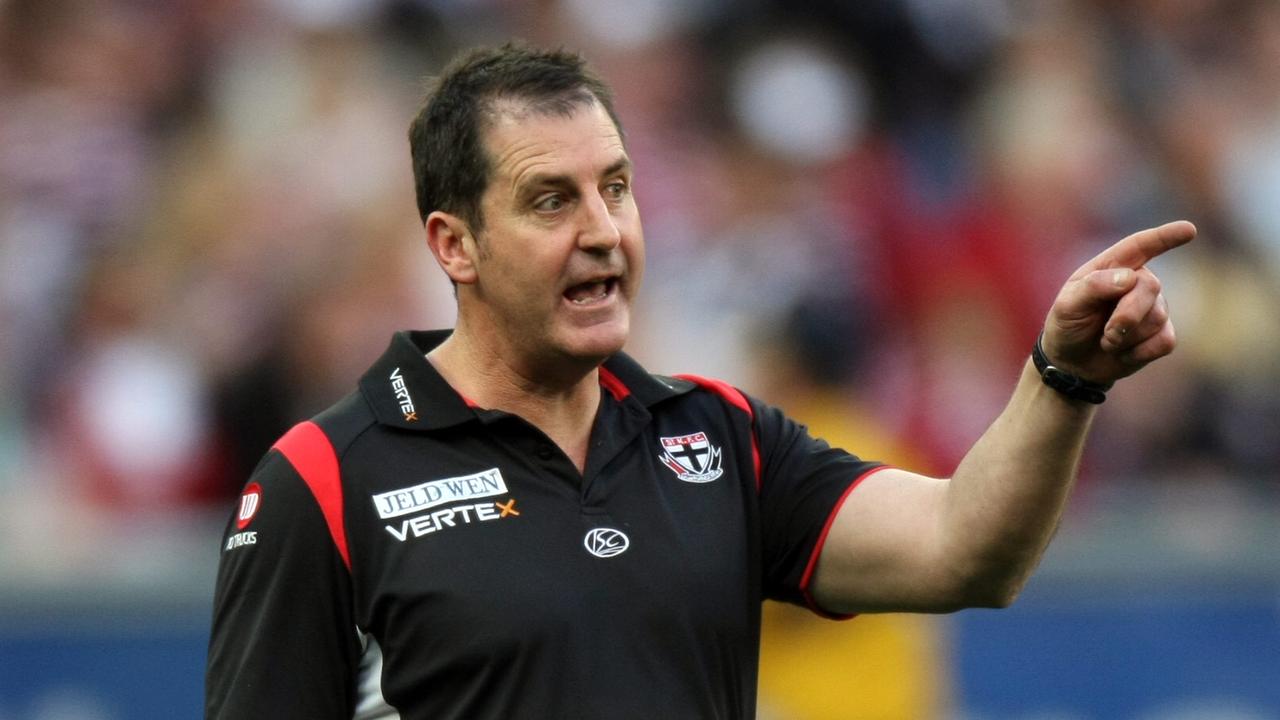
Ross Lyon, one of the most influential and polarising coaches in modern AFL history, is deeply woven into Fremantle’s story. His return to relevance in Dockers discourse — even through a simple message — has reopened conversations about leadership, legacy, pressure, and the long journey toward premiership success.
A Shared History at Fremantle
Ross Lyon’s association with Fremantle began in 2012, when he arrived at the club after a highly successful stint with St Kilda Football Club, where he guided the Saints to multiple Grand Finals. His move west was seen as a statement of intent from Fremantle — a signal that the club was serious about contending for a premiership.
Under Lyon, Fremantle became one of the most disciplined and defensively structured teams in the competition. His coaching philosophy transformed the Dockers into genuine contenders, culminating in the club’s first-ever AFL Grand Final appearance in 2013. Although Fremantle fell short on the day, the era remains one of the most competitive periods in the club’s history.
Justin Longmuir, now the senior coach, was a player under Lyon during that time. As a dependable defender, Longmuir experienced Lyon’s methods firsthand — the tactical detail, the emotional intensity, and the relentless demand for accountability. That shared history adds significant weight to any communication between the two men.
The Message That Sparked Attention
According to sources close to the club, Ross Lyon’s message to Longmuir was not critical, nor was it intended to stir controversy. Instead, it is believed to have been a message of reflection, encouragement, and perspective, delivered at a time when Fremantle finds itself under increasing external scrutiny.
The Dockers, a club that has long chased sustained success, are navigating the difficult balance between development and expectation. With a young list, rising stars, and passionate supporters eager for finals success, the pressure on Longmuir has steadily increased.
In that context, Lyon’s message has been widely interpreted as one coach acknowledging the unique challenges of leading Fremantle — a club with enormous potential but equally significant emotional weight.
Leadership Across Generations
What makes this moment particularly compelling is the generational contrast between Lyon and Longmuir. Lyon is known for his intense, sometimes uncompromising coaching style — a product of an era where structure and system were paramount. Longmuir, by contrast, represents a newer generation of AFL coaches, often praised for their emphasis on player connection, communication, and long-term development.
Despite those stylistic differences, both men share a deep understanding of what it takes to compete at the highest level. Lyon’s message, according to those familiar with its tone, acknowledged that coaching Fremantle is unlike coaching anywhere else in the AFL.
The club’s geographic isolation, passionate supporter base, and history of near-misses create a unique environment — one that can test even the most experienced football minds.
Fremantle’s Ongoing Journey
Since taking over as senior coach, Justin Longmuir has overseen a significant rebuild. He has focused on developing a strong core of young players while attempting to instil consistency and belief. While results have fluctuated, many within the football industry believe Fremantle is laying the foundations for long-term success.
Lyon’s message reportedly touched on the importance of patience and clarity of vision, lessons he himself learned during his time at the club. His Fremantle tenure was marked by both highs and challenges — including the difficulty of maintaining elite performance over multiple seasons.
For Longmuir, receiving advice or encouragement from a former coach who walked the same path carries undeniable significance.
Reaction From the AFL Community
News of the message has prompted a wave of reaction from fans and commentators. Some see it as a sign of respect between two football minds linked by shared history. Others view it as a reminder of the standards Fremantle once set — and the heights the club still aims to reach.
Former players have also weighed in, noting that such gestures are more common within AFL circles than the public often realises. Coaching, many say, can be an isolating role, and messages from those who understand the pressure can carry enormous value.
Importantly, there has been no suggestion that Lyon is seeking a return to Fremantle or offering unsolicited advice. Instead, the moment has been framed as one professional acknowledging another, recognising the challenges of leadership in a demanding competition.
A Legacy That Still Matters
Ross Lyon’s coaching legacy at Fremantle remains a defining chapter in the club’s history. While opinions on his methods may vary, his impact is undeniable. The standards he set — defensively, mentally, and tactically — continue to influence how the club is judged today.
Justin Longmuir, meanwhile, is carving out his own legacy. His task is not to replicate the past, but to build something sustainable for the future. Messages like Lyon’s serve as reminders that progress in football is rarely linear, and that even the most successful periods are built on perseverance through doubt.
Looking Ahead
As Fremantle continues its season, attention will remain firmly on Longmuir and his playing group. Whether the Dockers surge into contention or face further challenges, the broader narrative is clear: the club is still on a journey toward its ultimate goal.
Ross Lyon’s message may not change results on the scoreboard, but its symbolic value is significant. It highlights the shared experience of leadership, the enduring connection between past and present, and the reality that coaching — like football itself — is a continuous learning process.
In the high-pressure world of AFL, moments like these offer a rare glimpse into the human side of the game. Beyond tactics and team selection, football is about relationships, respect, and resilience. And sometimes, a message from someone who has been there before can mean more than any public statement ever could.
Leave a Reply