THESE IS THE BEST NEWS WE COULD HOPE FOR: In a moment that has sent shockwaves of joy through the valley and The EPL broader community, Nottingham Forest FC head Coach Oliver Glasner has officially confirmed that sensational forward Ian Storey-Moore is returning to the organisation _ this time not as a player but as their new senior c….see more
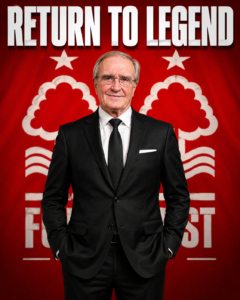
The headline has already generated enormous excitement: “THESE IS THE BEST NEWS WE COULD HOPE FOR.” According to the scenario described, Nottingham Forest head coach Oliver Glasner has confirmed that sensational former forward Ian Storey-Moore is returning to the organisation, this time not as a player but in a senior role. If such an appointment were officially confirmed, it would represent an extraordinary reunion between one of Forest’s most celebrated former players and the club where he established his name as a footballing icon.
Storey-Moore is not simply a former Nottingham Forest player. He is part of the club’s heritage.
He spent a decade with Forest from the early 1960s until 1972, scoring 105 league goals in 236 appearances according to Carlton Town, while other statistical records credit him with 117 goals in competitive matches. He was a forward capable of producing moments of brilliance, and his performances during one of the most memorable periods in Forest’s pre-European Cup history helped establish his reputation as a player supporters would never forget.
For generations of Forest fans, the name Ian Storey-Moore remains associated with excitement.
He was the kind of player who could make supporters rise from their seats before the ball had even reached the back of the net. His movement, dribbling ability and attacking instincts made him one of the most feared forwards of his generation, and his record demonstrates just how influential he was at the City Ground.
His story began when Nottingham Forest discovered him as a promising youngster. He eventually developed into a first-team star and became one of the defining attacking players of the club’s 1960s and early-1970s era. His contribution was particularly significant during the 1966–67 campaign, when Forest challenged strongly near the top of the English game.
The 1966–67 season remains a fascinating chapter in Forest’s history. Storey-Moore was part of a talented side that included players such as Joe Baker and Alan Hinton, and Forest famously defeated Manchester United 4–1 at the City Ground during that campaign.
That history explains why the idea of Storey-Moore returning to Nottingham Forest in a senior capacity would carry such emotional weight.
This would not be about bringing back a retired footballer simply because of his name. It would be about reconnecting the present with the past.
Storey-Moore understands what Nottingham Forest means to its supporters because he lived it. He experienced the pressure of representing the club, the expectations of playing at the City Ground and the responsibility that comes with wearing the famous red shirt.
He also understands that football has changed dramatically.
The game of today is faster, more commercial and more global than the game Storey-Moore played in. Modern clubs operate sophisticated recruitment departments, data-analysis teams, performance departments, international scouting networks and highly structured football operations.
Yet some things have not changed.
Young footballers still need guidance. Clubs still need people who understand character. Supporters still want players and staff who genuinely appreciate the badge. And successful football organisations still benefit from people who understand the culture of a club.
That is where a figure like Storey-Moore could potentially make an enormous difference.
His experience after his playing career is particularly relevant. He later worked as a scout for Nottingham Forest and Aston Villa, meaning his relationship with football did not end when his playing career finished. His career has therefore included not only playing but also scouting and football administration.
That background would make a senior position involving mentorship, scouting, football development, club representation or ambassadorial responsibilities especially meaningful.
Indeed, Storey-Moore’s connection with Nottingham Forest has remained strong over the decades.
In 2024, Carlton Town announced him as the club’s first-ever ambassador, describing him as a Forest legend and highlighting his continuing relationship with football in the Nottingham area. More recently, he has also appeared in Nottingham Forest legends activities at the City Ground, demonstrating that his association with the club remains alive more than half a century after his playing days ended.
Those connections make any potential return especially compelling.
Imagine Storey-Moore walking through the City Ground once again, not as the young forward who once terrified defenders, but as an experienced football figure carrying decades of knowledge.
For supporters, it would be a powerful sight.
For younger players, it could be even more valuable.
Modern footballers sometimes become disconnected from the history of the shirts they wear. A player may know the club’s famous European Cup victories, its legendary managers and celebrated names, but understanding history from someone who actually lived through earlier generations is different.
Storey-Moore could tell young players what it meant to represent Forest before modern football transformed the sport.
He could explain the expectations.
He could describe the atmosphere.
He could share stories about teammates, opponents and the demands of playing at the highest level.
Most importantly, he could communicate the idea that playing for Nottingham Forest is not simply another professional job.
It is an honour.
That message could resonate strongly inside a modern dressing room.
The scenario involving Oliver Glasner is particularly interesting because a head coach needs people around him who can bridge different aspects of football. A coach focuses heavily on tactics, training, preparation and results, but a football organisation also needs people who understand recruitment, player development, culture and history.
A senior role for a Forest legend could potentially complement those areas.
It could also strengthen the relationship between the club and its supporters.
Football supporters want to feel connected to their club. They want to know that the people making decisions understand what the badge represents. Bringing a respected former player into a meaningful role can help create that connection.
Storey-Moore’s standing among Forest supporters is considerable. Carlton Town’s account of his appointment as an ambassador noted that John Robertson, another iconic Forest figure, had once identified Storey-Moore as the greatest player in Forest history.
That is an extraordinary endorsement.
It tells us something about the respect Storey-Moore commands among those who understand the club’s history.
His individual numbers are also impressive.
He scored more than 100 league goals for Forest and earned one England cap while playing for the club. His career later took him to Manchester United, where he played alongside some of the most famous footballers in English football history, before injury eventually curtailed his league career.
His journey therefore gives him an unusual perspective.
He knows what it is like to be a young player trying to establish himself.
He knows what it is like to become a star.
He knows what it is like to leave a beloved club.
He knows what injury can take away from a footballer.
And he knows what it means to continue contributing to football after retirement.
All of those experiences could make him an intriguing figure within a modern football structure.
If the reported senior appointment were to become official, supporters would understandably want to know exactly what responsibilities Storey-Moore would have.
Would he work with the academy?
Would he advise the recruitment department?
Would he serve as a senior ambassador?
Would he help identify emerging talent?
Would he work directly with the coaching staff?
Would his role combine several of these responsibilities?
Whatever the answer, the emotional significance would remain the same: Ian Storey-Moore would once again be officially connected with Nottingham Forest.
And that is why this story has the potential to be so powerful.
Football is often obsessed with what comes next. New signings, new managers, new stadium plans, new competitions and new ambitions dominate the headlines. But the strongest clubs also understand the importance of remembering where they came from.
Nottingham Forest’s history is extraordinary.
The club has produced and attracted generations of outstanding footballers, and its European Cup triumphs under Brian Clough remain among English football’s greatest achievements.
Storey-Moore belongs to an earlier chapter of that story, before those European triumphs arrived. Yet his achievements helped make Forest a club capable of competing at the highest level.
His return would therefore represent a bridge between eras.
The young Ian Storey-Moore who once thrilled crowds at the City Ground would be connected with the modern Nottingham Forest attempting to build its own future.
That is the beauty of football.
Players leave.
Managers change.
Generations pass.
But the memories remain.
And occasionally, football gives supporters the opportunity to welcome one of their heroes home.
For Nottingham Forest fans, Ian Storey-Moore has never truly been far away.
His name remains woven into the club’s history. His performances remain remembered. His goals remain part of the statistical record. His connection with Forest supporters continues through legends events and appearances.
The prospect of giving him a senior place within the organisation would therefore be much more than a nostalgic gesture.
If officially confirmed, it could become a celebration of experience, loyalty and institutional memory.
It would also send a message to supporters that the club values the people who helped build its identity.
For a football club, that matters.
Success is not only measured by league positions and trophies. It is also measured by the strength of the relationship between the club and the people who care about it.
Ian Storey-Moore represents that relationship.
He wore the shirt.
He scored the goals.
He represented England.
He moved on to other chapters of his career.
But he never stopped being a Nottingham Forest legend.
And if the reported scenario becomes reality, his return would give supporters something they rarely get in modern football: the chance to welcome one of their heroes back into the heart of the organisation.
That is why the headline feels so emotional.
It is not simply about a former footballer returning.
It is about history coming home.
It is about a legendary Forest forward beginning another chapter with the club that helped make him famous.
And for supporters who remember Ian Storey-Moore’s brilliance—or those who have learned about it through stories passed down from previous generations—the possibility of seeing him officially involved with Nottingham Forest again would undoubtedly be a special moment.
One thing is certain from the historical record: Ian Storey-Moore’s place in Nottingham Forest history is secure. He remains one of the club’s most celebrated former forwards, with more than a century of league goals for Forest and a relationship with the club that has endured for decades.




Post Comment