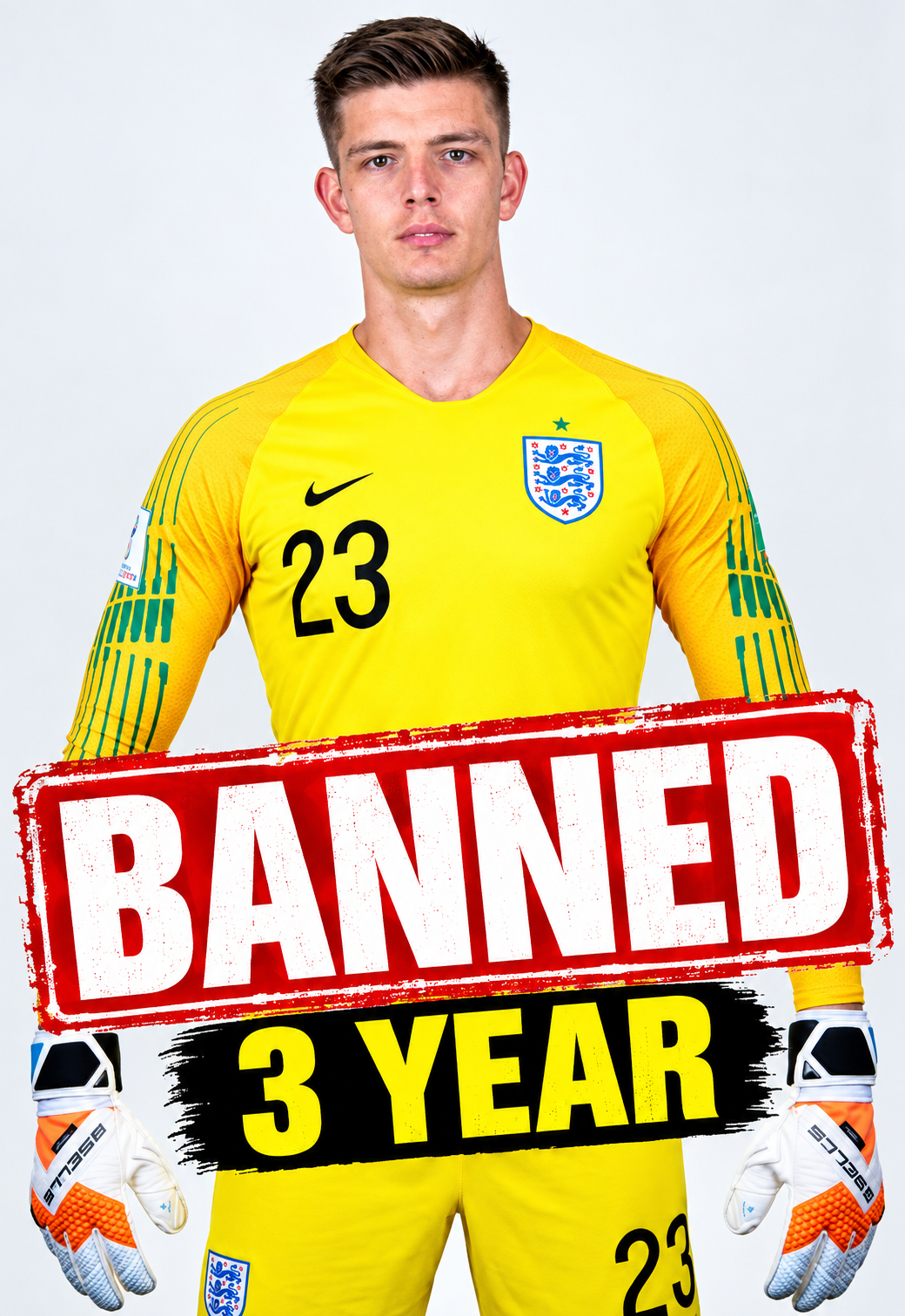
BOMBSHELL ANNOUNCEMENT: Everton FC defender Michael Keane has been banned and suspended from sport activities as he was tested positive of….see more

The dramatic claim, which has been circulating as a hypothetical breaking-news scenario, would represent one of the most serious developments of a player’s career if it were ever confirmed by the appropriate sporting authorities. However, no such real-world conclusion should be drawn from this fictional account.
For football supporters, allegations involving performance-enhancing substances are among the most sensitive stories in professional sport. A positive test can trigger investigations, provisional suspensions, hearings, appeals and, potentially, lengthy bans. It can also have consequences extending far beyond the football pitch, affecting a player’s reputation, club relationships and future career.
In this fictional scenario, the announcement arrives at a particularly dramatic moment. Supporters are left asking the same question: what exactly happened?
A Shock That Changes Everything
Imagine the football community waking up to an official-looking statement announcing that an Everton defender had returned an adverse analytical finding during a routine anti-doping test.
The news would immediately generate enormous attention.
Players at the highest level of football are subject to testing procedures designed to protect the integrity of competition. Samples may be collected during competitions or outside them, while athletes can be required to provide information about medications, supplements and other substances they have taken.
A positive result, however, does not automatically mean that an athlete deliberately cheated.
That distinction would be crucial in any real investigation.
There can be numerous reasons why a prohibited substance might appear in an athlete’s sample. Questions could arise about prescribed medication, contaminated supplements, accidental ingestion, or whether the athlete followed the applicable therapeutic-use rules.
That is why sporting authorities normally have procedures through which an athlete can respond to an adverse finding.
In the fictional Michael Keane scenario, those questions would quickly become the centre of attention.
What Happens After a Positive Test?
A doping case in professional sport is rarely as simple as a headline suggesting that a player “tested positive.”
Testing typically involves carefully controlled procedures, laboratory analysis and regulatory processes. Depending on the circumstances, an athlete may have rights concerning the analysis of a second sample, known commonly as the B sample, as well as the opportunity to provide an explanation and challenge disciplinary action.
The precise procedure depends on the governing body, the competition and the rules applicable to the athlete.
In our fictional story, Keane’s representatives would therefore be expected to examine every aspect of the alleged test.
What substance was detected?
At what concentration?
Was it prohibited at all times or only during competition?
Was there a legitimate medical explanation?
Was a supplement involved?
Were the relevant testing procedures followed correctly?
Those questions would matter enormously.
Everton Would Face Difficult Questions
For Everton, a fictional suspension involving an experienced defender would create an immediate sporting problem.
A club’s defensive structure depends heavily on organisation, communication and familiarity between players. Losing an established centre-back could force the manager to change his preferred defensive pairing or tactical system.
Young defenders could suddenly find themselves under greater pressure, while other experienced players would have to assume additional responsibility.
But the club’s challenge would not be limited to football.
Whenever a player becomes the subject of a disciplinary investigation, clubs generally have to balance several competing concerns. They must respect the regulatory process while also considering the welfare of the player and the interests of supporters.
A club cannot simply declare an athlete guilty because an allegation has appeared online.
That principle would be particularly important in this fictional case.
The Danger of Social Media
Perhaps the biggest complication in a modern sports controversy would be social media.
Within minutes of an alleged suspension being announced, thousands of posts could appear across platforms. Some supporters would demand answers. Others would defend the player. Some accounts might publish supposed “details” that had never been confirmed.
Rumours could spread faster than official information.
An innocent misunderstanding could become a worldwide story before the facts were established.
This is one reason responsible sports journalism requires caution when reporting allegations involving real athletes.
A headline saying that a player “tested positive” can be interpreted by readers as proof of intentional doping, even though a laboratory finding and a final disciplinary decision are not necessarily the same thing.
Reputation on the Line
For any professional footballer, reputation is one of the most valuable assets they possess.
Players spend years building public trust through performances, professionalism and conduct. A doping allegation can place all of that under intense scrutiny.
In our fictional storyline, Keane would face an uncomfortable period away from competitive football while the alleged matter was investigated.
Every interview would be examined.
Every previous performance might suddenly be discussed.
Every supplement or medication he had used could become a subject of speculation.
Yet the fictional scenario also highlights an important principle: an accusation is not the same as a final finding of guilt.
That principle applies not only to football but to sport generally.
Supporters Would Demand Clarity
Everton supporters would naturally want answers.
Football fans invest enormous emotional energy in their clubs. When a major controversy emerges, supporters expect transparency and accountability.
Some would ask the club to release more information.
Others would argue that the player should be given due process before judgment.
There would likely be heated debates among supporters, pundits and former players.
Television programmes could dedicate entire segments to the issue. Newspapers could publish timelines explaining the alleged events. Social media would be filled with competing theories.
But amid all the noise, official documentation would remain the most important source of information.
What Could a Suspension Mean?
If a real athlete were eventually found to have committed an anti-doping rule violation, the consequences could vary substantially depending on the substance, circumstances and applicable regulations.
Possible sanctions can include periods of ineligibility, disqualification of results and other penalties.
The length of a ban is not necessarily determined simply by the fact that a prohibited substance was detected.
Sporting authorities can consider factors such as intent, fault, negligence and the circumstances surrounding the violation, depending on the governing rules.
That is why sensational headlines can sometimes hide a much more complicated legal and regulatory process.
The Appeal Process
Another important element in a hypothetical case would be the right to challenge a disciplinary decision.
Athletes can, depending on the rules involved, have avenues of appeal. The process may involve sporting tribunals or other designated bodies.
An appeal can examine whether the regulations were correctly applied, whether the evidence supports the finding and whether the sanction is appropriate.
Therefore, even after an initial decision, a case may continue for months.
That possibility would add another layer of drama to our fictional storyline.
A Lesson for Football
The fictional controversy also highlights the broader importance of anti-doping regulations.
Professional sport depends on competition being conducted fairly. Players and teams must be confident that their opponents are competing within the rules.
At the same time, athletes deserve a fair process when allegations arise.
Those two principles are not contradictory.
Strong anti-doping systems need effective testing, but they also need transparent procedures that protect athletes from unjust conclusions.
Football’s enormous global audience makes this particularly important. A rumour involving a famous player can reach millions of people before the individual involved has an opportunity to respond.
Waiting for Facts
If such a story were ever to emerge in reality, the responsible approach would be to wait for confirmation from the relevant sporting authorities, the club and the player’s representatives.
Fans should be cautious about reposting screenshots, anonymous claims or sensational social-media posts presented as official announcements.
The difference between “reportedly,” “allegedly,” “provisionally suspended” and “found guilty” is enormous.
Those terms describe different stages of a disciplinary process.
For that reason, the fictional claim that Michael Keane has been banned should not be treated as a factual report.
Conclusion
The hypothetical announcement involving Michael Keane demonstrates just how quickly a doping allegation could shake the football world.
For a player, the consequences would potentially extend beyond missing matches. Reputation, career prospects and public perception could all be affected. For the club, the sporting and public-relations challenges could be equally significant.




Post Comment