
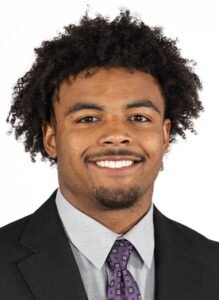
 In an era where college athletics is increasingly shaped by name, image, and deals, branding opportunities, and lucrative contracts, a stunning announcement from Manhattan, Kansas has sent shockwaves across the National Collegiate Athletic Association (NCAA). Kansas State Wildcats running back **Dylan Edwards** has become the center of national attention—not for a record-breaking run or a championship-clinching touchdown, but for a decision many are calling one of the most selfless acts in the history of college sports.
Upon signing a historic NCAA-related contract valued at a reported **$105 million**, Edwards made an announcement that instantly reframed the conversation around money, fame, and purpose in collegiate athletics. Instead of securing personal wealth, luxury, or long-term financial comfort, the young running back declared that he would **donate the entirety of his signing bonus** to causes aimed at uplifting underserved communities, expanding access to education, and supporting former athletes struggling with life beyond the game.
The announcement, delivered during a quiet press conference that quickly became anything but quiet, stunned teammates, coaches, administrators, and fans alike. Within minutes, social media erupted. Within hours, national sports networks interrupted programming. And by the end of the day, Dylan Edwards’ name was trending not just in sports circles, but in conversations about leadership, values, and the true meaning of success
For many athletes, especially those from humble beginnings, a contract of this magnitude represents generational change. It is often the culmination of years of sacrifice, discipline, and relentless pursuit of excellence. No one would have questioned Edwards had he chosen to keep every dollar.
Yet, standing at the podium, Edwards spoke with a calm conviction that suggested this decision had been weighing on him long before the cameras arrived.
> “Football has given me a platform,” he said. “But it was never meant to define my humanity. I’ve always believed that what you do with your blessings matters more than the blessings themselves.”
Those words immediately resonated across the country.
Edwards explained that his decision was inspired by his upbringing, where community support played a critical role in shaping his path. Coaches who volunteered extra hours, teachers who provided meals, neighbors who believed in him when opportunities were limited—these were the people he credited for his success.
“This money was never just mine,” he added. “It represents every person who invested in me when they had nothing to gain.
According to representatives close to the program, the $105 million donation is being distributed across several initiatives:
Rather than creating a single foundation bearing his name, Edwards reportedly insisted that the funds be allocated through existing organizations with proven track records. This choice, according to those familiar with the process, was intentional.
“He didn’t want recognition,” said one university official. “He wanted results.
The NCAA released a statement acknowledging the unprecedented nature of the decision, praising Edwards for his character and leadership.
“While student-athletes are free to make individual choices regarding their compensation, Dylan Edwards’ actions represent a powerful reminder of the broader impact college athletics can have on society,” the statement read.
Kansas State head coach offered a more personal reflection.
“I’ve coached a lot of talented players,” he said. “But very few young men redefine what leadership looks like. Dylan just did that.”
Teammates described a locker room filled with emotion. Some players admitted they were speechless; others said the decision changed how they viewed their own futures.
“It makes you think beyond football,” one teammate shared. “It makes you ask what kind of legacy you actually want to leave
Analysts are already debating whether Edwards’ decision could mark a turning point in the culture of collegiate athletics. While NIL opportunities have empowered athletes financially, critics argue that the system risks turning college sports into a purely commercial enterprise.
Edwards’ move challenges that narrative.
“This wasn’t anti-money,” said a sports economist. “This was pro-meaning. And that distinction matters.”
Some believe his action may inspire other athletes to reconsider how they use their platforms. Others caution against placing unrealistic expectations on young players.
Still, even skeptics admit the moment is significant.
“You don’t have to donate everything to be inspired by this,” one commentator said. “But you can’t ignore it eith
Perhaps the most remarkable aspect of this story is Edwards’ response to the attention. When asked how he felt about being called a hero, he gently pushed back.
“I’m not trying to be extraordinary,” he said. “I’m just trying to be responsible with what I’ve been given.”
That humility, many say, is what elevates this moment beyond sports news and into something more enduring.
In a time marked by division, cynicism, and relentless competition, Dylan Edwards has offered a counter-narrative—one rooted in generosity, gratitude, and long-term impact.
### A Legacy Still Being Written
Dylan Edwards will still take the field. He will still run, block, train, and compete at the highest level of college football. Wins and losses will come and go. Records may be broken or surpassed.
But regardless of what happens on Saturdays, his place in the broader story of college athletics is already secured.
Not because of yards gained or touchdowns scored—but because, when given everything, he chose to give it away.
And in doing so, Dylan Edwards reminded the NCAA, the sports world, and the nation that sometimes the most powerful plays happen far beyond the end zone.
Leave a Reply