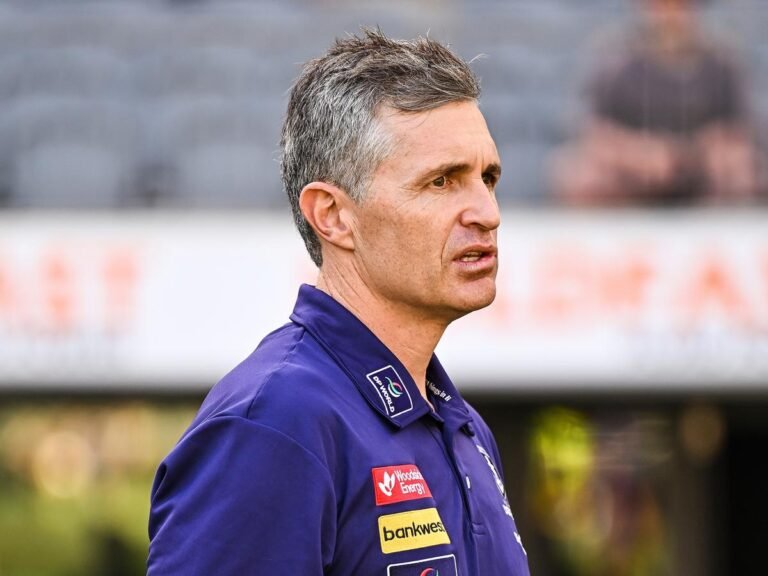
BREAKING NEWS: In a jaw- dropping turn events, Collingwood football and Australian football league (AFL) Community are disappointed as their Defender Isaac Quaynor made a stunning decision that has sent shockwaves throughout the Organization and the broads AFL world in shock as he submitted his resignation Boldly with…..see more

Isaac Quaynor, long regarded as one of Collingwood’s most dependable and composed defenders, has been a cornerstone of the club’s backline. Known for his athleticism, calm decision-making, and ability to shut down some of the league’s most dangerous forwards, Quaynor has earned respect not only from teammates and coaches but also from rivals and supporters across the AFL landscape. That is precisely why news of his resignation has landed with such force.
A Shock That Rocked the Club
According to sources close to the situation, Quaynor’s resignation was delivered directly to Collingwood’s senior leadership in a private meeting that reportedly left officials speechless. While rumours had circulated in recent weeks about growing frustrations and internal reflection, few believed the situation would culminate in such a decisive and dramatic move.
Within hours, the news spread like wildfire. Social media platforms were flooded with disbelief, tributes, speculation, and emotional responses from fans who had proudly worn Quaynor’s number on their backs. Many described the moment as “surreal,” while others struggled to reconcile how a player still in his prime could walk away so suddenly.
The Weight of Expectations
In the high-stakes world of AFL, players are celebrated as heroes on game day but often carry immense pressure behind the scenes. Expectations from clubs, supporters, media, and sponsors can be relentless. For a player like Quaynor—who has consistently been entrusted with crucial defensive assignments—the mental and emotional demands can be just as intense as the physical ones.
This resignation has reignited broader conversations around player welfare, mental health, and the long-term sustainability of elite performance. While the AFL has made strides in recent years to prioritise wellbeing, moments like this underscore how complex and deeply personal such decisions can be.
A Leader Beyond Statistics
What makes this development even more impactful is Quaynor’s reputation as more than just a footballer. Teammates have often spoken of his professionalism, humility, and leadership qualities. He was seen as a role model for younger players and a figure capable of shaping the club’s future.
His presence extended beyond the boundary lines. Community engagement, youth development programs, and cultural leadership were all areas where Quaynor was said to have made a meaningful contribution. Losing such a figure, even in a fictional scenario, represents more than a tactical gap—it leaves an emotional and cultural void.
The AFL World Reacts
Across the broader AFL community, reactions have been swift and emotional. Former players, commentators, and analysts have weighed in, many expressing sympathy and respect for what must have been a difficult personal decision. Others have pointed to the incident as a wake-up call for the league, urging administrators to continue evolving how players are supported throughout their careers.
Opposition clubs, too, have reportedly expressed surprise. Rivalries aside, there is a shared understanding among players of what it takes to compete at the elite level—and how challenging that journey can be.
What Comes Next for Collingwood?
For Collingwood Football Club, the resignation presents both an immediate challenge and a long-term test. On-field, the coaching staff would be forced to reassess defensive structures, leadership roles, and match-day strategies. Replacing a player of Quaynor’s calibre is no small task, particularly when the loss is sudden and unexpected.
Off-field, the club faces questions about culture, communication, and support systems. While no organisation can fully control personal decisions, moments like this often prompt internal reflection and, potentially, reform.
A Defining Moment for the Game
Whether viewed through the lens of sport, leadership, or human resilience, this scenario serves as a powerful reminder that footballers are people first. Behind the cheers, statistics, and premiership dreams lie complex individuals navigating pressure, expectation, and personal growth.
If nothing else, this imagined resignation stands as a symbolic moment—one that challenges fans and officials alike to look beyond the scoreboard and recognise the human cost of elite competition.
Final Thoughts
As the dust settles on this jaw-dropping development, one truth remains clear: moments like these change conversations. They force clubs, leagues, and supporters to pause, reflect, and reconsider what success truly means in professional sport.