BOMBSHELL ANNOUNCEMENT: Newcastle United FC goalkeeper Nick Pope has been banned and suspended from sports activities as he was tested positive of….see more
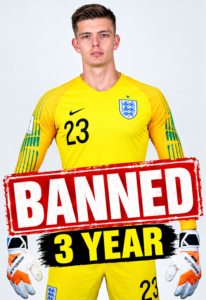
The hypothetical development would represent one of the most shocking moments of Pope’s career and would immediately create major questions surrounding Newcastle United’s goalkeeping department, the player’s future and the wider issue of anti-doping regulations in professional football.
According to the fictional storyline, the test was conducted as part of a standard anti-doping programme designed to ensure that professional footballers comply with the rules governing prohibited substances. The imaginary announcement would state that a sample provided by the goalkeeper had produced an abnormal result, triggering an investigation by the relevant sporting authorities.
It is important to stress that this scenario is not a report of a real event. The allegation in the headline is being used as the basis for a fictional football article.
A SHOCKING SCENARIO FOR NEWCASTLE
Nick Pope has established himself as one of the most experienced goalkeepers in English football. His performances between the posts have made him an important figure at Newcastle United, and any genuine suspension would therefore have significant consequences for the club.
In this fictional scenario, supporters would naturally demand immediate answers after hearing that their goalkeeper had allegedly been removed from football activities.
The first question would be what substance supposedly triggered the test result.
Anti-doping cases can be complicated, and a positive analytical finding does not automatically mean that an athlete deliberately cheated. There can be investigations into how a prohibited substance entered an athlete’s system, whether an approved medical treatment was involved, whether there was a therapeutic-use exemption, and whether testing or procedural issues need to be examined.
Therefore, even in this fictional storyline, it would be inaccurate to automatically describe the goalkeeper as guilty of deliberately using performance-enhancing drugs simply because a test allegedly produced an abnormal result.
WHAT WOULD A PROVISIONAL SUSPENSION MEAN?
If a professional footballer genuinely faced a provisional suspension, the immediate consequences could be significant.
Depending on the applicable regulations and the authority handling the case, the player could potentially be prevented from participating in competitive matches while the investigation continues.
For Newcastle United, that would mean preparing for matches without one of the club’s established goalkeeping options.
The club’s coaching staff would have to determine whether another senior goalkeeper could take over the starting position. Training arrangements could also change, while the club’s medical and legal departments would potentially become involved in supporting the player through the process.
The fictional suspension would also create a major media story because of Pope’s profile and his importance to Newcastle.
THE IMPORTANCE OF DUE PROCESS
One of the biggest lessons from any alleged anti-doping case is the importance of allowing the investigation to take its course.
A positive test can lead to questions, but questions are not the same thing as proof of intentional wrongdoing.
In a real case, the athlete would generally have rights under the applicable anti-doping regulations. Depending on the circumstances, this could include the opportunity to request analysis of a B sample, present evidence, challenge aspects of the testing process or explain the presence of the substance.
That distinction would be particularly important in this fictional Pope scenario.
Social media would almost certainly react immediately, with supporters and critics expressing opinions before all the facts were available. However, responsible reporting would require journalists to distinguish between an allegation, an investigation, a provisional suspension and a final disciplinary decision.
WHAT COULD HAPPEN TO NEWCASTLE?
From Newcastle United’s perspective, the sporting consequences would potentially be enormous.
Goalkeepers occupy a unique position within a team. Unlike an outfield player, the goalkeeper cannot simply be rotated into another position without significantly changing the team’s structure.
If Pope were unavailable in this fictional scenario, Newcastle’s coaching staff would need to place their confidence in another goalkeeper.
The replacement would face enormous pressure, particularly if the team were competing for European qualification, domestic trophies or important Premier League positions.
Every save, mistake and goal conceded could attract additional attention because supporters would constantly be reminded that the club’s established goalkeeper was unavailable.
SUPPORTERS WOULD DEMAND CLARITY
Newcastle supporters are passionate about their club, and a story of this magnitude would inevitably produce intense debate.
Some fans would immediately demand an explanation from the club and the player. Others would insist that Pope should be presumed innocent until the relevant authorities complete their investigation.
There would also be questions about whether Newcastle had received sufficient information from the sporting authorities and whether the club could make a detailed public statement while an investigation was ongoing.
The fictional situation would demonstrate how quickly a sporting story can become much larger than the original allegation.
THE PLAYER’S RESPONSE WOULD BE CRUCIAL
In any genuine disciplinary investigation involving an athlete, the player’s response can become an important part of the public conversation.
In this imagined storyline, Pope could potentially issue a statement denying deliberate wrongdoing and explaining that he intended to cooperate fully with the investigation.
His legal representatives could also work with the relevant sporting authorities to understand the circumstances surrounding the alleged finding.
However, no statement should be interpreted as proof of guilt or innocence by itself. The final outcome would depend on the evidence and the applicable regulations.
WHY AN ATHLETE MIGHT TEST POSITIVE
Another important issue is that prohibited substances can enter an athlete’s body through different circumstances.
Some substances are banned because they can enhance performance. Others may be prohibited only in particular circumstances or above specified thresholds.
Athletes therefore have significant responsibilities concerning medications, supplements and other products they consume.
Professional football clubs generally have medical and performance departments designed to help players navigate these issues. Nevertheless, anti-doping regulations can be complex, and athletes must carefully comply with the relevant rules.
This is why a fictional positive test involving a high-profile footballer would not automatically answer the question of how the substance entered the player’s body.
THE WIDER DOPING ISSUE IN FOOTBALL
Anti-doping remains an important part of modern professional sport.
Football authorities want competitions to remain fair and protect the health of players. Testing programmes exist to discourage athletes from using prohibited substances and to identify potential violations.
At the same time, disciplinary systems need to balance strict enforcement with fairness to athletes.
A footballer accused of an anti-doping violation should not automatically be condemned by public opinion before the relevant process has been completed.
The fictional story surrounding Pope highlights precisely why these cases require careful reporting.
A POTENTIAL CAREER DEFINING MOMENT
For Pope, an actual suspension of this nature would potentially become one of the most serious developments of his professional career.
The goalkeeper has spent years competing at the highest level of English football, and any disciplinary case could have consequences extending beyond individual matches.
Sponsors, supporters, teammates and clubs could all be affected by the outcome.
But because this article is fictional, none of those consequences should be interpreted as something currently happening to Pope.
WHAT WOULD HAPPEN NEXT?
In the fictional scenario, the next stage would involve the relevant sporting authority continuing its investigation.
The player could be expected to receive information about the alleged violation and the procedures available to him.
Depending on the rules governing the case, further testing, evidence and hearings could eventually determine whether a violation occurred and whether any sanction should be imposed.
If the athlete successfully challenged the allegation, the provisional suspension could potentially be lifted. If the violation were established, the authority could determine an appropriate sanction according to the applicable regulations.
The key point is that an initial test result would not necessarily represent the final conclusion.
NEWCASTLE FANS WOULD WAIT FOR ANSWERS
For Newcastle supporters, the fictional announcement would create an uncomfortable period of uncertainty.
The club would need to concentrate on football while dealing with questions surrounding one of its goalkeepers.
The team’s other goalkeeping options would suddenly become much more important, and the coaching staff would have to ensure that the squad remained focused.
Meanwhile, supporters would likely continue asking the same question:
What exactly happened?
Until an investigation was completed, however, responsible reporting would avoid turning speculation into fact.
FINAL WORD
The fictional bombshell involving Nick Pope demonstrates just how quickly an alleged anti-doping case could become one of the biggest stories in football.
A goalkeeper’s absence could have major sporting consequences for Newcastle United, while the player would potentially face intense scrutiny from supporters and the media.
Yet the most important principle remains due process.
A reported or alleged positive test is not, by itself, sufficient evidence to declare an athlete guilty of deliberate doping. Any genuine case would need to be assessed according to the relevant anti-doping regulations, with the player given the appropriate opportunity to respond.




Post Comment